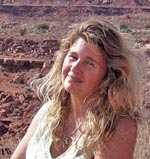
I am grateful for this component of the program and for Veronica and her skills. I don't feel it necessary to go into all of the details of the group dynamics or the issues, but they were addressed within these sessions, and Veronica was a great support.
Life transitions, following your heart, and honoring your process.
Monday, September 5, 2011
Emotional dealings...
I am grateful for this component of the program and for Veronica and her skills. I don't feel it necessary to go into all of the details of the group dynamics or the issues, but they were addressed within these sessions, and Veronica was a great support.
Monday, August 1, 2011
Trigger Point Therapy
Our next modality at the Sedona School of Massage was Neuromuscular Therapy (NMT) or Trigger Point Therapy. It was taught by this wonderful spirit, Kate, who made a special trip to Sedona for this course. She had a great teaching style and was quite intuitive. She made the learning fun and lessened our anxiety. She often didn't teach so early in the program, but I think it worked out best this way, since she was a great support at our first massage clinic where we had to do massages on actual clients. It felt way too soon for me to be doing massages on actual clients, but Kate was confident in us and our healing hands.
I found that I really liked learning NMT because it had an explorative component to it. I had to focus on the muscles of the body and to seek out the trigger points (knots, adhesions) - this required an intuitive challenge that I liked. It also gave me a sense of the body in a way that was totally different from Swedish. Swedish felt more general, more gross motor for lack of a better explanation. NMT was finer, more tuned in and dealt with the specifics of the muscles versus the overall muscle. Of course, in working on the trigger points we were dealing with the function of the whole muscle, but, this specific work seemed to provide some great relief that isn't always an outcome from Swedish, in my opinion.
And, this modality unleashed the joy that I have for investigation. It made the process fun...find the trigger points, massage and get some sense of release. It was a process that may require more than one visit due to the holding habits and patterns, but clients often walked out feeling different immediately. I knew this was going to be one modality that I would utilize. In trying to make the massage flow, Swedish strokes were incorporated into the Trigger Point session. A massage session was being developed as we learned each new modality.
From Mama's Health:
Trigger point therapy is a bodywork technique that involves the applying of pressure to tender muscle tissue in order to relieve pain and dysfunction in other parts of the body. Sometimes massage and trigger point therapy are performed together. Trigger point therapy is also called myofascial trigger point therapy. It was developed by Dr. Janet Travel in the United States in the 1940s.
What are Trigger Points?
Trigger points are areas of tenderness in a muscle. There are two basic types of trigger points: active and latent. Active trigger points cause muscular pain and will refer pain and tenderness to another area of the body when pressure is applied. Latent trigger points only exhibit pain when compressed, they do not refer pain to other areas of the body. Latent trigger points are believed to be one of the causes of stiff joints and restricted range of motion of old age. Trigger points may be associated with myofascial pain syndromes or fibromyalgia. Trigger points are very common. They are also referred to as muscle knots. Trigger points differ from acupressure points. Acupressure points are concentrations of energy or blockages of the body's energy pathways. Trigger points are physical phenomena that can be felt by touch. The pain caused by trigger points may be the biggest cause of disability and loss of time in the workplace.
What Causes Trigger Points?
Trigger points have several causes. Some common causes of trigger points are: birth trauma, an injury sustained in a fall or accident, poor posture, or overexertion.
What is the Purpose of Trigger Point Therapy?
The purpose of trigger point therapy is to eliminate pain and to re-educate the muscles into pain-free habits. After several treatments, the swelling and stiffness of neuromuscular pain is reduced, range of motion is increased, tension is relieved, and circulation, flexibility and coordination are improved.
Trigger Point Therapy can also be done on oneself, with the use of tools. Using a tennis ball or the like, if someone doesn't have a formal tool, see photo. Release can be provided by using different sized balls and adding some movement, if possible.
I found that I really liked learning NMT because it had an explorative component to it. I had to focus on the muscles of the body and to seek out the trigger points (knots, adhesions) - this required an intuitive challenge that I liked. It also gave me a sense of the body in a way that was totally different from Swedish. Swedish felt more general, more gross motor for lack of a better explanation. NMT was finer, more tuned in and dealt with the specifics of the muscles versus the overall muscle. Of course, in working on the trigger points we were dealing with the function of the whole muscle, but, this specific work seemed to provide some great relief that isn't always an outcome from Swedish, in my opinion.
Trigger point therapy is a bodywork technique that involves the applying of pressure to tender muscle tissue in order to relieve pain and dysfunction in other parts of the body. Sometimes massage and trigger point therapy are performed together. Trigger point therapy is also called myofascial trigger point therapy. It was developed by Dr. Janet Travel in the United States in the 1940s.
What are Trigger Points?
What Causes Trigger Points?
Trigger points have several causes. Some common causes of trigger points are: birth trauma, an injury sustained in a fall or accident, poor posture, or overexertion.
What is the Purpose of Trigger Point Therapy?
Thursday, July 7, 2011
Ho'oponopono
Meditations were a part of the massage training and I found them extremely beneficial. There is a shift that happens within me when I can connect with the silence, my breathe, and/or the words of the guided visualizations. I attempt to include it as a daily practice but am not always successful. There were different approaches to the meditations provided by the different instructors where some included music and guided instructions, and others were silent where we focused on our breathe and whatever was coming up for us. Most often we were given an opportunity to share afterwards, but this certainly was optional. One in particular, I use when I have strong feelings that I want to release around an issue, person or situation. It is called Ho'opononono
.
Ho'oponopono is ancient Hawaiian word that means to 'make right'.
From the website of: www.hooponoponohelp.com/
Ho'oponopono (Ho oponopono, Hooponopono) is a process for solving problems. But ho'oponopono does more than just solve problems - it's a means for getting aligned with existence. This might sound complicated or "out there" and maybe it is, but ho'oponopono isn't necessarily easy to put into a neat little package. The truth is, ho'oponopono is both simple and complex. Most important of all, ho'oponopono (ho oponopono, hooponopono) is a big help.
If you were looking for the key aspect of ho'oponopono, it's probably this: everything comes from you. Within ho'oponopono this is often referred to as 100% responsibility, and it means that every problem you experience is happening because of you. It's a safe bet that ho'oponopono wasn't intended to win popularity contests, because telling someone they are responsible for every problem that's experienced is a sure way to meet up with some strong resistance and also rejection.
Ho'oponopono can be applied through different processes. Mentally saying 'I love you, I'm sorry, please forgive me, thank you' is a ho'oponopono process.

I use this simple version even in passing when something comes up that I know has triggered something for me, especially around family issues and relationships. It works for me. It is a process for forgiveness, myself included for myself and toward others. A different version is provided below by an alternate website.
From the website of: www.ancienthuna.com/ho-oponopono.htm
THEORY: We carry inside us as parts of the Unconscious Mind, all the significant people in our lives. (These parts of us often look very much like Carl Jung's archetypes.) Ho'oponopono makes it "all right" with them. The process of Ho'oponopono is to align with and clean up our genealogy as well as to clean up our relationships with other people in our lives.
The Process of Ho'oponopono:
Bring to mind anyone with whom you do not feel total alignment or support, etc.
In your mind's eye, construct a small stage below you
Imagine an infinite source of love and healing flowing from a source above the top of your head (from your Higher Self), and open up the top of your head, and let the source of love and healing flow down inside your body, fill up the body, and overflow out your heart to heal up the person on the stage. Be sure it is all right for you to heal the person and that they accept the healing.
When the healing is complete, have a discussion with the person and forgive them, and have them forgive you.
Next, let go of the person, and see them floating away. As they do, cut the aka cord that connects the two of you (if appropriate). If you are healing in a current primary relationship, then assimilate the person inside you.
Do this with every person in your life with whom you are incomplete, or not aligned.
The final test is, can you see the person or think of them without feeling any negative emotions. If you do feel negative emotions when you do, then do the process again.
As someone else described, Ho'oponopono is where all problems begin as thought; all thoughts are imbued with memories' memories of persons, places or things. When you do Ho'oponopono, Divinity takes the painful thought and neutralizes it. You don't have to know what the problem is, just notice any problem or feeling that you are experiencing mentally, physically or emotionally. Once you notice, your responsibility is to immediately begin to clean, to say the mantra of: "I am sorry. Please Forgive me. Thank you. I love you."
If you are inclined towards meditation, and are new to this ancient technique, give it a try and see if it resonates with you. It did with me. In gratitude...
.
From the website of: www.hooponoponohelp.com/
Ho'oponopono (Ho oponopono, Hooponopono) is a process for solving problems. But ho'oponopono does more than just solve problems - it's a means for getting aligned with existence. This might sound complicated or "out there" and maybe it is, but ho'oponopono isn't necessarily easy to put into a neat little package. The truth is, ho'oponopono is both simple and complex. Most important of all, ho'oponopono (ho oponopono, hooponopono) is a big help.
If you were looking for the key aspect of ho'oponopono, it's probably this: everything comes from you. Within ho'oponopono this is often referred to as 100% responsibility, and it means that every problem you experience is happening because of you. It's a safe bet that ho'oponopono wasn't intended to win popularity contests, because telling someone they are responsible for every problem that's experienced is a sure way to meet up with some strong resistance and also rejection.
Ho'oponopono can be applied through different processes. Mentally saying 'I love you, I'm sorry, please forgive me, thank you' is a ho'oponopono process.
I use this simple version even in passing when something comes up that I know has triggered something for me, especially around family issues and relationships. It works for me. It is a process for forgiveness, myself included for myself and toward others. A different version is provided below by an alternate website.
From the website of: www.ancienthuna.com/ho-oponopono.htm
THEORY: We carry inside us as parts of the Unconscious Mind, all the significant people in our lives. (These parts of us often look very much like Carl Jung's archetypes.) Ho'oponopono makes it "all right" with them. The process of Ho'oponopono is to align with and clean up our genealogy as well as to clean up our relationships with other people in our lives.
The Process of Ho'oponopono:
Bring to mind anyone with whom you do not feel total alignment or support, etc.
In your mind's eye, construct a small stage below you
Imagine an infinite source of love and healing flowing from a source above the top of your head (from your Higher Self), and open up the top of your head, and let the source of love and healing flow down inside your body, fill up the body, and overflow out your heart to heal up the person on the stage. Be sure it is all right for you to heal the person and that they accept the healing.
When the healing is complete, have a discussion with the person and forgive them, and have them forgive you.
Next, let go of the person, and see them floating away. As they do, cut the aka cord that connects the two of you (if appropriate). If you are healing in a current primary relationship, then assimilate the person inside you.
Do this with every person in your life with whom you are incomplete, or not aligned.
The final test is, can you see the person or think of them without feeling any negative emotions. If you do feel negative emotions when you do, then do the process again.
If you are inclined towards meditation, and are new to this ancient technique, give it a try and see if it resonates with you. It did with me. In gratitude...
Spiritual and physical health - Nomadics
Even from the beginning stages of learning Swedish massage, self care on a spiritual and physical level was incorporated into the program. We had some wonderful meditations provided by the massage instructor which usually transitioned us back into classroom mode after lunch, or a way to end a long day of studying and practicing massage techniques. As well, we began learning exercises called Nomadics. These exercises certainly were supportive of our own personal physical health and allowed for release of habitual holding patterns, etc. Some of the exercises are quite simple but have great impact especially when used consistently over time. Advanced exercises were shown, suggested and offered by DVDs as well if we wanted to further study Nomadics.
Nomadics was created by Martin Gray and his story is certainly of interest.
www.sacredsites.com/martin_gray/index.html
Quoted from Martin Gray's website:
NOMADICS are a unique synthesis of athletic and dance exercises, physical therapy techniques, and meditation practices from around the world. A truly comprehensive exercise system consisting of four distinct movement forms, Nomadics effectively develops each of the five fundamental movement dynamics. In addition to their physical benefits, the Nomadics exercises also have a psycho-spiritual effect. Research findings in the fields of somatic psychology and psychoneuroimmunology indicate that training the body for strength, flexibility, endurance, coordination, and balance simultaneously develops those same qualities in the mind. In other words, psychology may be accessed through physiology. Utilizing the Nomadics movement-meditations, we can work on our minds by working on our bodies.

Personally, I had used Feldenkrais exercises for years to deal with my own neck and back issues. These exercises are so beneficial and supportive on multiple levels. However, as we started Nomadics I realized that these exercises were just as supportive and beneficial. Whenever possible, I suggest these exercises to friends and clients. I, also use them myself, especially when the pain in my body or spirit has returned.
Nomadics was created by Martin Gray and his story is certainly of interest.
www.sacredsites.com/martin_gray/index.html
Quoted from Martin Gray's website:
NOMADICS are a unique synthesis of athletic and dance exercises, physical therapy techniques, and meditation practices from around the world. A truly comprehensive exercise system consisting of four distinct movement forms, Nomadics effectively develops each of the five fundamental movement dynamics. In addition to their physical benefits, the Nomadics exercises also have a psycho-spiritual effect. Research findings in the fields of somatic psychology and psychoneuroimmunology indicate that training the body for strength, flexibility, endurance, coordination, and balance simultaneously develops those same qualities in the mind. In other words, psychology may be accessed through physiology. Utilizing the Nomadics movement-meditations, we can work on our minds by working on our bodies.
Personally, I had used Feldenkrais exercises for years to deal with my own neck and back issues. These exercises are so beneficial and supportive on multiple levels. However, as we started Nomadics I realized that these exercises were just as supportive and beneficial. Whenever possible, I suggest these exercises to friends and clients. I, also use them myself, especially when the pain in my body or spirit has returned.
Tuesday, June 21, 2011
The beginnings...Swedish massage
Each day, I walked up the long road to the school, enjoying the view of the Red Rocks and the cool fresh air. I had been in Mexico, near the ocean, where it was much warmer. It was February, and the weather in Sedona was a bit cooler than I had been accustomed to. I was enjoying, yet adjusting. As a class, we started to learn about Swedish massage first, while simultaneously beginning the anatomy and physiology lessons.
Below is a definition of Swedish Massage (quoted from an unknown source):
"The term "Swedish Massage" refers to a variety of techniques specifically designed to relax muscles by applying pressure to them against deeper muscles and bones, and rubbing in the same direction as the flow of blood returning to the heart. This form of massage was created at the turn of the century by Henry Peter Ling in Sweden. It involves the use of kneading, stroking, friction, tapping, and vibration and may provide relief from stiffness, numbness, pain, constipation, and other health problems.
The main purpose of Swedish massage is to increase the oxygen flow in the blood and release toxins from the muscles. Other possible benefits include stimulation of circulation, an increase in muscle tone, and a balance of the musculo-skeletal systems. Swedish massage shortens recovery time from muscular strain by flushing the tissues of lactic acid, uric acid, and other metabolic wastes. It increases circulation without increasing heart load.
The usual sequence in which a Swedish massage strokes are conducted are Effleurage, Petrissage, Friction, Vibration, Percussion, and finally passive and active movements (bending and stretching)."

As a group, we were learning how to be respectful of touching people we hardly knew, and to make sure that in our learning we were being supportive of each other, our learning processes and differences. Due to some class dynamics, the process was not always easy with personal situations interrupting the learning process. It was all new, overwhelming and exciting, simultaneously. I hadn't been a part of a group in this way for some time, so gauging how I wanted to participate and the depth of how much I wanted to share of myself was an ongoing process. From the beginning, I realized that I needed to establish boundaries since we were all at different emotional levels, and with a small group such as this, it could be easy to return to some co-dependent tendencies. I wanted to remain balanced and supportive, but not to get enmeshed in any dysfunction or personal issues that needed to remain outside of the classroom.
We were learning the different strokes, having plenty of opportunities to practice each of them, and eventually putting all of the strokes together to provide a flowing massage. I can only speak for myself, but it was not as easy as it looked when the teacher did it. I was a bit frustrated that I couldn't handle the body with such ease and fluidity as the instructor...however, I can be quite hard on myself if I don't perform well immediately....A personal lesson to be revisited many times in my life, yet, it felt good to be challenging myself with something new. I still can remember the day that it these strokes clicked and it was a relief.
After two weeks, we grasped the different strokes involved in Swedish massage, and were beginning to give quality feedback that would assist us in making adjustments to our strokes. As we started to learn other modalities I realized the benefit of learning Swedish first - these were the basic strokes of many modalities and could be incorporated into other other techniques to actually make the massage experience more fluid.
To assist in my learning, I started to write 'massage recipes', which meant that I recorded all the strokes for each body part, which supported my learning process and memory, and, reduced my anxiety of having to remember everything for each modality. We were using, Trail Guides to the Body for our anatomy text, which I studied relentlessly. It is a great book which provides wonderful visuals which I needed since I am a visual learner.

After these two weeks, I felt like we had made progress as a group, getting to know each other, forming trust and friendships. The Swedish massage instructor included opportunities for meditations and interpersonal growth, and times when we could share our feelings about what we were experiencing. We had managed to get through the initial hands-on lessons of the massage program and we were to begin learning another modality, Trigger Point Therapy, also known as Neuromuscular Therapy.
Below is a definition of Swedish Massage (quoted from an unknown source):
"The term "Swedish Massage" refers to a variety of techniques specifically designed to relax muscles by applying pressure to them against deeper muscles and bones, and rubbing in the same direction as the flow of blood returning to the heart. This form of massage was created at the turn of the century by Henry Peter Ling in Sweden. It involves the use of kneading, stroking, friction, tapping, and vibration and may provide relief from stiffness, numbness, pain, constipation, and other health problems.
The main purpose of Swedish massage is to increase the oxygen flow in the blood and release toxins from the muscles. Other possible benefits include stimulation of circulation, an increase in muscle tone, and a balance of the musculo-skeletal systems. Swedish massage shortens recovery time from muscular strain by flushing the tissues of lactic acid, uric acid, and other metabolic wastes. It increases circulation without increasing heart load.
The usual sequence in which a Swedish massage strokes are conducted are Effleurage, Petrissage, Friction, Vibration, Percussion, and finally passive and active movements (bending and stretching)."
As a group, we were learning how to be respectful of touching people we hardly knew, and to make sure that in our learning we were being supportive of each other, our learning processes and differences. Due to some class dynamics, the process was not always easy with personal situations interrupting the learning process. It was all new, overwhelming and exciting, simultaneously. I hadn't been a part of a group in this way for some time, so gauging how I wanted to participate and the depth of how much I wanted to share of myself was an ongoing process. From the beginning, I realized that I needed to establish boundaries since we were all at different emotional levels, and with a small group such as this, it could be easy to return to some co-dependent tendencies. I wanted to remain balanced and supportive, but not to get enmeshed in any dysfunction or personal issues that needed to remain outside of the classroom.
We were learning the different strokes, having plenty of opportunities to practice each of them, and eventually putting all of the strokes together to provide a flowing massage. I can only speak for myself, but it was not as easy as it looked when the teacher did it. I was a bit frustrated that I couldn't handle the body with such ease and fluidity as the instructor...however, I can be quite hard on myself if I don't perform well immediately....A personal lesson to be revisited many times in my life, yet, it felt good to be challenging myself with something new. I still can remember the day that it these strokes clicked and it was a relief.
After two weeks, we grasped the different strokes involved in Swedish massage, and were beginning to give quality feedback that would assist us in making adjustments to our strokes. As we started to learn other modalities I realized the benefit of learning Swedish first - these were the basic strokes of many modalities and could be incorporated into other other techniques to actually make the massage experience more fluid.
To assist in my learning, I started to write 'massage recipes', which meant that I recorded all the strokes for each body part, which supported my learning process and memory, and, reduced my anxiety of having to remember everything for each modality. We were using, Trail Guides to the Body for our anatomy text, which I studied relentlessly. It is a great book which provides wonderful visuals which I needed since I am a visual learner.
After these two weeks, I felt like we had made progress as a group, getting to know each other, forming trust and friendships. The Swedish massage instructor included opportunities for meditations and interpersonal growth, and times when we could share our feelings about what we were experiencing. We had managed to get through the initial hands-on lessons of the massage program and we were to begin learning another modality, Trigger Point Therapy, also known as Neuromuscular Therapy.
Sunday, June 12, 2011
Starting school
I arrived back in the States (from Mexico) with lots of mixed emotions and trepidation. Although everything fell into place easily and rapidly, even an affordable place to live, in walking distance to the school since I was without a car, I was uncertain about returning to school. I was concerned about my learning style, being a visual learner, and knowing that not all teachers recognize different learning styles in their approach. And, I was doubting myself, that I could actually remember the content that was needed to become a bodyworker. I struggled with my own imperfections and the need to perfect, when the reality of it was that I wanted to let go of that self-critic. My focus was just to be me, in all my human-ness, including the imperfections. Yet, despite my fears, I was excited to be in Sedona, and to be learning something new. I had done the same thing for over 20 years and it was something that did not bring me the joy that comes with embarking on a new course. I walked into the school with the determination to be authentic and to let things unfold, and to embrace the new. And, I could feel the excitement throbbing throughout my body and spirit.

These were tough economic times and many people were not investing in education. The school had reduced their tuition in order to accommodate the economic times, but still people were afraid to invest in something when they were struggling financially. As a result, my class was quite small and intimate. This had its pros and cons.
The smallness met my need to not be in a large traditional classroom. I was much more comfortable in a smaller group. There was a mix of ages, which shouldn't have made a difference, but it did. I was relieved to have more mature classmates, assuming that these people who had walked through life a bit, had done some of their own emotional and spiritual work. Due to this, from the beginning, I presumed that our intention would be similar - to be focused and committed to learning. After the initial day, I felt that the younger students seemed to have a similar intention as well. However, as time progressed, I was reminded that assumptions and first impressions aren't always accurate. But, no matter what transpired, it provided opportunities of addressing our issues, going with the flow, and letting go those things that didn't resonate with us.
The school provided time for all of us to get acquainted before we jumped into the material, and before we had to touch each other during the massage lessons. One of the get acquainted activities was a hike in the Red Rocks. It was amazing! Yet, I was challenged by my own self concern about my abilities of performing while being in a group. I tended to do physical activities on my own, concerned by my inabilities or under performing compared to the group. I realized that this school experience was going to give me unexpected opportunities to address some life-long issues, and to let them go.
Hiking became a daily ritual for me, whether it was with the class, a classmate, or by myself. My meditative morning walks supported my shift to focusing on my body and my health, physically and emotionally. As the program progressed, I realized that I was not only here for the schooling, but to become physically health, and to release some of the weight and the resistance I had around being disciplined in this area.
Even from the beginning, I knew that I was in the right place. And, that I was following my dream of living fully and accepting who I was on all levels.
After those three days of orientation, we began the formal lessons, starting with anatomy and Swedish massage. Once we started, I began to gain confidence that I could actually do this - be successful in the learning of it all.

Bell Rock
Cathedral Rock
A Trip to Remember ~ who you are!
Sedona is magical and the energy is experienced differently for each individual.
Wherever you are on your path, Sedona will lead you through many new doorways.
We are gathering as empowered souls, journeying to Self.
Expect Miracles!!
These were tough economic times and many people were not investing in education. The school had reduced their tuition in order to accommodate the economic times, but still people were afraid to invest in something when they were struggling financially. As a result, my class was quite small and intimate. This had its pros and cons.
The smallness met my need to not be in a large traditional classroom. I was much more comfortable in a smaller group. There was a mix of ages, which shouldn't have made a difference, but it did. I was relieved to have more mature classmates, assuming that these people who had walked through life a bit, had done some of their own emotional and spiritual work. Due to this, from the beginning, I presumed that our intention would be similar - to be focused and committed to learning. After the initial day, I felt that the younger students seemed to have a similar intention as well. However, as time progressed, I was reminded that assumptions and first impressions aren't always accurate. But, no matter what transpired, it provided opportunities of addressing our issues, going with the flow, and letting go those things that didn't resonate with us.
The school provided time for all of us to get acquainted before we jumped into the material, and before we had to touch each other during the massage lessons. One of the get acquainted activities was a hike in the Red Rocks. It was amazing! Yet, I was challenged by my own self concern about my abilities of performing while being in a group. I tended to do physical activities on my own, concerned by my inabilities or under performing compared to the group. I realized that this school experience was going to give me unexpected opportunities to address some life-long issues, and to let them go.
Hiking became a daily ritual for me, whether it was with the class, a classmate, or by myself. My meditative morning walks supported my shift to focusing on my body and my health, physically and emotionally. As the program progressed, I realized that I was not only here for the schooling, but to become physically health, and to release some of the weight and the resistance I had around being disciplined in this area.
Even from the beginning, I knew that I was in the right place. And, that I was following my dream of living fully and accepting who I was on all levels.
After those three days of orientation, we began the formal lessons, starting with anatomy and Swedish massage. Once we started, I began to gain confidence that I could actually do this - be successful in the learning of it all.
Bell Rock
A Trip to Remember ~ who you are!
Sedona is magical and the energy is experienced differently for each individual.
Wherever you are on your path, Sedona will lead you through many new doorways.
We are gathering as empowered souls, journeying to Self.
Expect Miracles!!
Subscribe to:
Posts (Atom)